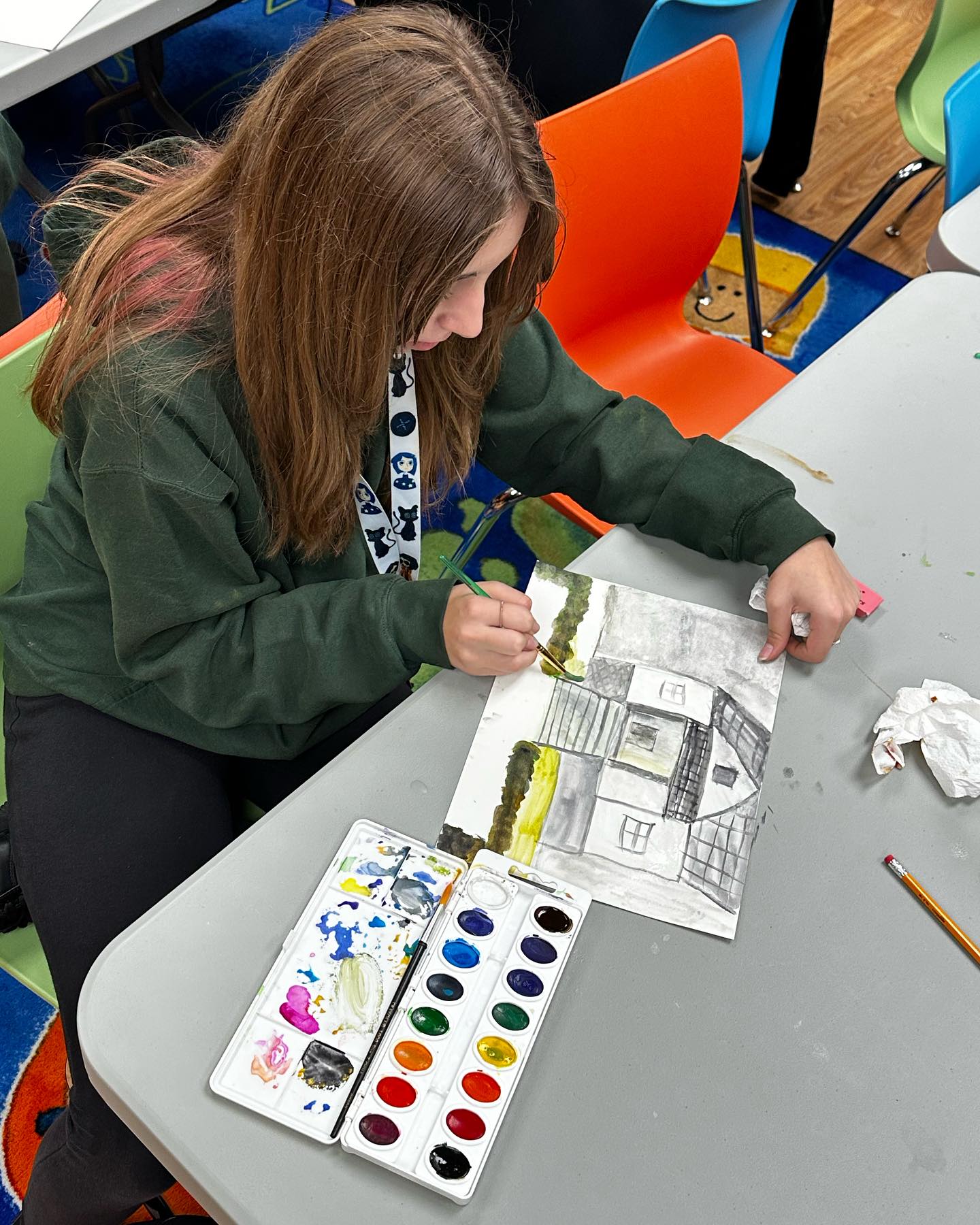
This is the fifth installment in my Art Club series—and it may have been the most imaginative one yet.
After exploring artists like Wassily Kandinsky, Andy Warhol, Michelangelo, and Dan Flavin, this session shifted the focus from famous artists to the kids themselves.
This time, the theme was simple:
Illustrators — Listen to a story and draw what you hear.
No visual references.
No step-by-step examples.
Just imagination, storytelling, and art.
Art Club has always been designed for grades 1–12, which means projects need to work for a huge age range and flexible attendance. This activity ended up being perfect because younger kids could focus on simple scenes and characters, while older kids experimented with mood, composition, perspective, and detail.
Every single piece turned out completely different—even though everyone heard the same story.
Introducing the Role of an Illustrator
We started with a short discussion about illustrators and how they help bring stories to life.
Here’s a simple introduction you can use:
Illustrators are artists who create pictures for stories. Sometimes they draw exactly what’s happening in the book, and sometimes they add details and emotions that help readers imagine the story even more. Today, you’re going to become an illustrator by listening carefully to a story and creating the pictures in your own mind.
We talked about how no two people imagine a story the exact same way.
One might picture a forest at night.
Another might imagine the same forest during sunset.
Neither is wrong.
That idea immediately gave kids permission to be creative.
And once the audiobook started, the room became completely focused.
The Inspiration: Drawing From Imagination
This project was all about active listening and visualization.
Instead of copying an image from a screen or following directions, kids had to:
- Listen carefully
- Imagine characters and settings
- Decide what moments stood out most
- Turn words into pictures
It became part art project, part reading comprehension activity, and part creative storytelling exercise.
And the best part? Even reluctant artists felt successful because there was no “correct” answer.
The Project: Illustrate the Story
Step 1: Set the Scene
Each child received watercolor paper or canvas (sturdy foundation makes for a better keepsake) along with their choice of materials. Below are links to my favorite products:
- Pencils for sketching
- Acrylic Paint
- Watercolors or Watercolor Pencils
- Oil pastels
- Paint Brushes
Also nice to have:
Before starting, I encouraged them to listen for:
- Important details
- Character descriptions
- Mood and emotion
- Interesting settings
- Action scenes
Some kids planned their drawings first.
Others jumped right in as the story played.
Step 2: Listen and Create
As the audiobook played, kids illustrated scenes inspired by what they heard.
Some drew:
- Entire story scenes
- Character portraits
- Scenery
- Comic-style panels
- Abstract interpretations of emotions and action
One of my favorite things about this program was watching kids pause, think, and suddenly rush to add a detail they had just heard mentioned in the story.
It turned listening into something active.
Step 3: Share the Different Interpretations
At the end, we displayed the artwork and compared how differently everyone imagined the exact same story.
Some illustrations were bright and whimsical.
Some were dark and dramatic.
Some focused on tiny details.
Others captured big action moments.
It can start a fantastic conversation about imagination and perspective.
Suggested Short Audiobooks / Read-Alouds
The sweet spot was stories around 10–20 minutes long or chapters with strong imagery. When I ran this program, it was October, so we listened to Scary Stories to Tell in the Dark.
You can also use:
- Folktales
- Fairytales
- Graphic audio clips
Why This Program Worked
This project worked so well because it combined:
- Literacy and art
- Listening comprehension
- Creativity without pressure
- Personal interpretation
- Flexible skill levels
And because everyone visualized the story differently, every single participant felt ownership over what they created.
Audio Setup
- Bluetooth speaker
- Tablet/laptop/phone for audiobook playback
- Audiobook app or library digital service
Optional Extras
- Clipboards
- Black fine-tip markers for outlining
- Extra paper for second illustrations
Tips for Success
- Choose stories with vivid descriptions and strong imagery
- Keep audio clips relatively short for younger audiences
- If a particularly interesting part of the story is read, ask if they want the story paused.
- Remind kids there’s no “right” way to picture the story
- Let them choose their own art materials
- Encourage them to focus on moments that stand out to them personally
Final Thoughts
What I loved most about this program was how naturally it blended literacy and creativity together.
Kids weren’t just listening passively.
They were visualizing.
Interpreting.
Creating.
And when the session ended, the room looked like dozens of completely different books had been read—even though everyone heard the same story.
That’s the magic of illustration.
If you enjoyed this post and want to see others like it, check out these popular posts & subscribe to get the newest posts delivered to your inbox!
*This blog is intentionally ad-free. I want it to be a clean, distraction-free space. Here, public librarians can find practical ideas for youth services, outreach, and programming. There will be no pop-ups or sponsored clutter.
Some posts may include affiliate links for books or supplies I genuinely use and recommend. If you choose to purchase through those links, I may earn a small commission at no additional cost to you. It’s a simple way to support the work while getting materials for your own programs.
If you’ve found value in these ideas, please consider helping keep the blog running. I’m unemployed, so tips are always appreciated. They go directly toward hosting costs and content creation. You can do so here: https://www.paypal.com/ncp/payment/SPBXH4RPDHCCY

Leave a Reply