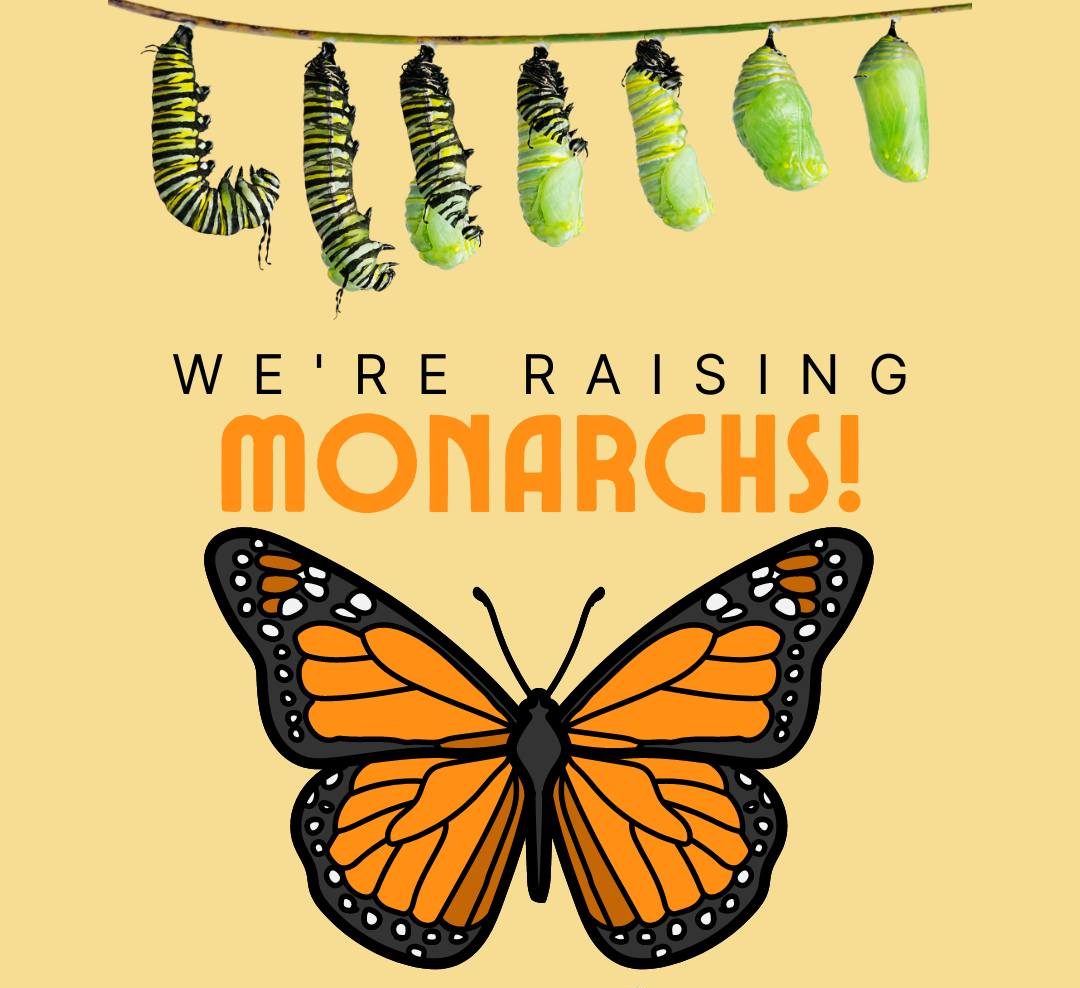
Every once in a while, a program comes along that is simple to run, inexpensive to implement, and absolutely magical to witness.
Raising monarch butterflies in the library is one of those programs.
Visitors become captivated from the moment they spot the first tiny caterpillar. Their attention remains until the day a newly emerged butterfly takes flight. The transformation captures attention across generations. It’s science, storytelling, environmental education, and community-building—all happening inside a mesh enclosure near your reference desk.
And the best part? It’s low-cost and surprisingly low effort.
Getting Started: Collecting Monarch Eggs Locally
The process begins outdoors.
Monarch butterflies lay their eggs exclusively on milkweed. If you have access to pesticide-free milkweed in your area, you can collect a few leaves carefully. Look for such milkweed in public gardens, nature preserves where permitted, or your own yard. Make sure the leaves have eggs attached. Always check local guidelines before collecting.
Monarch eggs are tiny and white. They are about the size of a pinhead. Usually, they are found on the underside of milkweed leaves. Within a few days, they hatch into caterpillars, and that’s when the real excitement begins.
Important tips:
- Only collect what you can responsibly care for.
- Keep fresh milkweed available daily. They eat A LOT!
- Ensure your milkweed source has not been treated with pesticides.
This is a wonderful opportunity to teach patrons about native plants, pollinators, and habitat loss—all through observation.
Supplies You’ll Need
- Mesh butterfly enclosure https://amzn.to/4bo7CYd
- Small containers for leaves/eggs
- Paper towels to line the bottom of the enclosure for easy cleanup
- Fresh milkweed (replenished daily)
- Small paintbrush (for gently moving tiny caterpillars if needed)
- Educational signage (see download below)
- Journal or observation log
- Lifecycle Manipilatives https://amzn.to/47ZmvxM

Maintaining the Enclosure (Simple Daily System)
This is where staff often hesitate—but it’s much easier than it seems when broken into small, consistent tasks.
Daily Care Routine (10–15 minutes total)
Morning (Opening Staff / Youth Services)
- Replace old or eaten milkweed with fresh leaves
- Check for newly hatched caterpillars
- Ensure enclosure is secure
- Lightly mist if needed (avoid direct spraying on caterpillars)
Midday (Optional – Great for Teen Volunteers)
- Remove heavily soiled leaves
- Quick visual check (Are caterpillars active and eating?)
- Engage with patrons who stop by
End of Day (Closing Staff)
- Remove frass (caterpillar droppings)
- Replace paper towel lining if needed
- Check for new chrysalises
- Prep milkweed for the next day
Download a free checklist & fact sheet HERE!
Partnering with Monarch Watch
If you want to extend the educational impact, consider working with Monarch Watch (monarchwatch.org). They offer tagging kits. These kits allow you to tag migrating monarchs in the fall. This is part of a larger conservation effort.
Through tagging and tracking, your small library program becomes part of an international research initiative. Patrons are often amazed to learn that “their” butterfly could travel thousands of miles to Mexico.
It transforms a simple life cycle lesson into real-world citizen science.
Inviting the Community Into the Process

This program thrives when it’s visible and interactive.
Here are easy ways to involve visitors:
1. Create a Monarch Observation Station
Set up the enclosure in a high-traffic area with:
- A labeled life cycle chart
- Books about monarchs & migration
- Fun monarch facts
- A magnifying glass
- A simple Q&A board (“What do monarchs eat?” “How long are the caterpillars?”)
2. Daily or Weekly Updates
Post small signs:
- “Two new caterpillars hatched today!”
- “We have our first chrysalis!”
Children love checking back to see what’s changed.
3. Monarch Journal
Invite visitors to:
- Draw what they see
- Write predictions
- Record dates of transformation
You’ve just added literacy and observational science to the experience.
4. Mini Pop-Up Lessons
No formal program required. When families gather near the enclosure, offer a quick 2-minute explanation of what’s happening. Those informal learning moments are powerful.
The Transformation: Social Media Content Series
Document the journey! This makes incredible, built-in content.
🥚 Egg Stage Post
Caption:Look closely! That tiny speck on the milkweed leaf is a monarch egg. In just a few days, it will hatch into a caterpillar no bigger than a grain of rice. Nature is full of quiet miracles—come see one happening at your library.
🐛 Caterpillar Stage Post
Caption:We have caterpillars! Monarch caterpillars eat only milkweed and grow quickly—shedding their skin several times before forming a chrysalis. Stop by and watch them munch!

💚 Chrysalis Stage Post
Caption: Transformation in progress. Our caterpillars have formed chrysalides. Inside, an incredible change is happening. In about 10–14 days, butterflies will emerge.
🦋 Emergence Post
Caption:It happened! Our first monarch butterfly has emerged. After resting and drying its wings, it will be ready for release. Stay tuned for our community release date!

Announcing the Release Event
When butterflies are ready:
Community Release Announcement Post: Join us this Friday at 4pm as we release our monarch butterflies! Watch them take their first flight and celebrate the end of an incredible transformation. All ages welcome. Let’s send them off together.
Release days become mini community gatherings. Families plan around them. Children who watched the process feel invested. It’s simple—but deeply meaningful.
Why Programs Like This Matter
Raising monarchs:
- Teaches life cycles in a hands-on way
- Introduces environmental stewardship
- Encourages repeat visits
- Sparks inter-generational conversations
- Connects your library to larger conservation efforts
- Creates shared community memories
Libraries are more than book repositories—they are living learning spaces. Programs like this position the library as a place of wonder, curiosity, and belonging.
For more information on raising monarchs, here are some great resources:
If you enjoyed this post and want to see others like it, check out these popular posts & subscribe to get the newest posts delivered to your inbox!
*This blog is intentionally ad-free. I want it to be a clean, distraction-free space. Here, public librarians can find practical ideas for youth services, outreach, and programming. There will be no pop-ups or sponsored clutter.
Some posts may include affiliate links for books or supplies I genuinely use and recommend. If you choose to purchase through those links, I may earn a small commission at no additional cost to you. It’s a simple way to support the work while getting materials for your own programs.
If you’ve found value in these ideas, please consider helping keep the blog running. I’m unemployed, so tips are always appreciated. They go directly toward hosting costs and content creation. You can do so here: https://www.paypal.com/ncp/payment/SPBXH4RPDHCCY


Leave a Reply