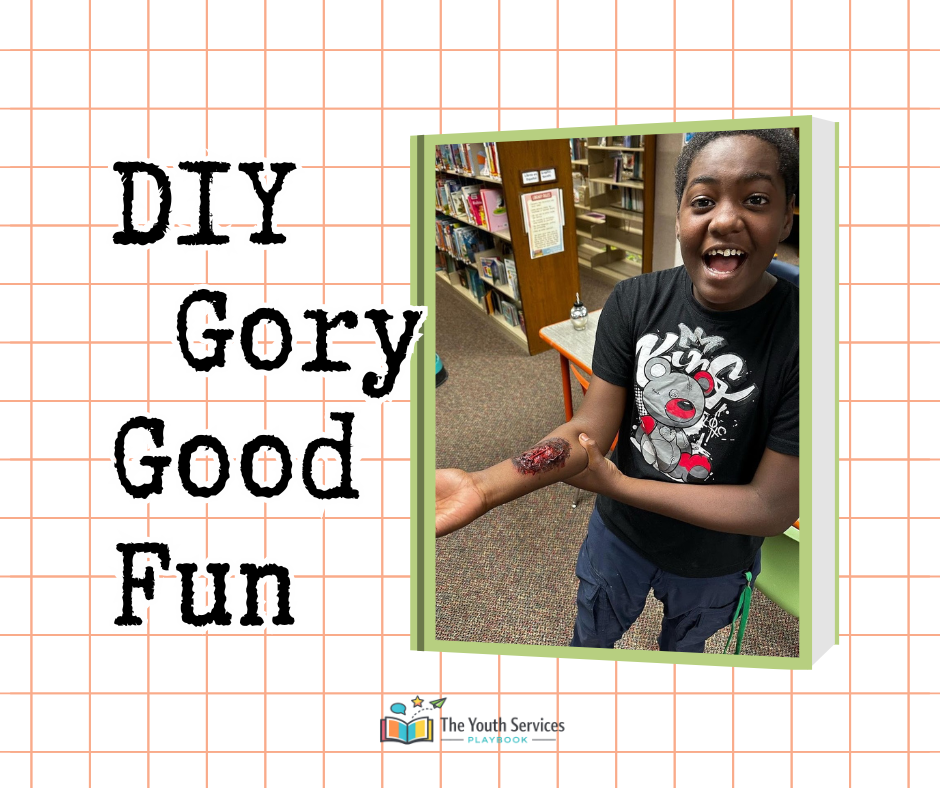
Halloween programs are always popular with teens, but if you’re looking for something beyond pumpkin painting or horror movie trivia, special effects (SFX) makeup is HIGHLY RECOMMENDED!
It’s creative, hands-on, encourages artistic expression, and, best of all, teens leave with a new skill they can use long after the program ends!
One year, we invited local special effects makeup artist Ashley Ayotte to volunteer her time and lead a workshop, and it quickly became one of our most talked-about teen events of the season.
For Ashley, volunteering wasn’t just about teaching teens how to make fake wounds. It was about giving young people an opportunity she wished she’d had herself.
“As a child I noticed a lack of options available for me to be creative. There were always a ton of sports but not much in the way of art. As an adult, I try to provide safe spaces for youth to experience art as well.”
And that’s one of the things I love about programs like this. Sometimes a library program isn’t simply filling an hour on the calendar. It can introduce a young person to an interest, skill, or creative outlet they didn’t know was available to them.
Why Teens Love It
There’s something incredibly satisfying about creating realistic cuts, bruises, burns, scars, or zombie makeup from scratch. For some teens, it’s an introduction to theater, cosplay, or special effects. For others, it’s simply a chance to get creative and try something completely different.
Ashley especially enjoys seeing the moment when everything comes together.
“Watching them light up when their designs work. Knowing that one might pursue special effects because someone cared enough to take the time to show them something different.”
Unlike many crafts that end up in the trash, SFX makeup is a skill teens can continue practicing at home and show off on Halloween.
We Sent Everyone Home Ready for Halloween
Realizing it didn’t take much makeup for these looks, we ended up with plenty left over to send each participant home with a small special effects makeup kit! Instead of only creating one look during the workshop, they had everything they needed to recreate the techniques later for Halloween parties, school events, or trick-or-treating.
Our take-home kits included small amounts of the basic materials they would need, so they could recreate or practice at home. It extended the experience well beyond the hour they spent at the library, and you don’t necessarily need an expensive collection of products to get started!
Ashley spoke about her favorite beginner supplies:
“It might be surprising, but bathroom tissue, scar wax or liquid latex, and a good tri-color palette is all you need for an amazing wound!”
Sometimes the simplest materials are enough to create something impressive.
See our list of supplies below.
Partner With Local Talent
If your community has:
- A professional makeup artist
- A theater makeup instructor
- A cosmetology school
- A haunted house makeup team
- A local theater group
- A performing arts program
Consider inviting them to teach.
Not only does it provide participants with expert instruction, but it also helps build relationships with talented members of your community.
Many local artists enjoy sharing their skills and may volunteer their time or offer discounted workshops for libraries, just like Ashley!
Ashley got started with special effects makeup through her own experience in the performing arts. She attended school for Performing Arts and had to learn to do her own stage makeup. From there, she became interested in other types of makeup and began experimenting with special effects.
She watched videos, looked at photographs in books, tried different tools and techniques, and eventually built a collection of techniques that worked for her.
That’s another great reminder for librarians: you don’t need to be the expert.
You just need to find someone who is willing to share what they know and love.
No Guest Presenter? No Problem!
Don’t let the lack of an instructor stop you from offering this program.
There are countless free tutorials online that walk participants through beginner-friendly special effects techniques. You can project a tutorial for everyone to follow together or create stations where teens work at their own pace.
When I asked Ashley what resources she recommends for beginners, she didn’t name one particular website or YouTube channel.
Instead, she offered some great advice:
“Absorb as much as you’re able! Start with a simple, slow video, or photo tutorial. From there you can dabble.”
Here are a few places to start:
- SFX Makeup Wounds | Beginner Friendly Makeup Tutorial | Fast Paced Makeup Tutorial
- SFX Makeup Abrasions Tutorial | Beginner Friendly SFX Makeup Tutorial
- SFX scar using toilet paper
- DIY Scar WAX And FAKE BLOOD Halloween SFX Makeup TUTORIAL
I also enjoy learning alongside the teens! Often, this is a great relationship-building opportunity in itself and one of my favorite ways to get to know them.
Tip: If you’re using YouTube or other online tutorials, be sure to preview before your program to ensure they’re appropriate for your audience and match the skill level you’re targeting.
Start Small and Focus on One Effect
One of Ashley’s biggest pieces of advice is not to try to teach everything at once.
“Leaving it open to their choice pulls your attention. Focus on one type, and if it’s successful, offer others.”
Instead of announcing a program where teens can make *anything they want*, choose one technique and build the workshop around it.
For example:
* Today we’re learning fake scars.
* Today we’re creating a zombie bite.
* Today we’re making a broken-bone effect.
* Today we’re learning how to create a realistic burn.
* Today we’re making a simple open wound.
This also makes planning much easier because you’ll know exactly what supplies you need, and it gives teens a clear goal to work toward.


A Little Goes a Long Way
SFX makeup can look complicated, but beginners don’t need to pile on product to create an effective design.
Ashley recommends taking your time.
“A little goes a long way! Shading is everything with effect makeup. A little dab of paint could cover an entire wound. Go slow, take your time. Add depth with colors.”
Don’t rush the process. Layer colors. Add shadows. Experiment. The goal isn’t perfection. It’s learning how the materials work and figuring out what techniques create the effect you’re looking for.
Tips for a Successful Program
A few things we learned along the way:
- Ask participants to wear clothing they don’t mind getting messy.
- Provide mirrors.
- Have makeup remover, baby wipes, and paper towels available.
- Cover tables with disposable tablecloths.
- Encourage everyone to practice on their own arm before moving to their face.
- Remind participants not to share makeup applicators.
- Set up individual workstations before participants arrive.
- Have a clearly designated cleaning station.
- Tell participants ahead of time what effect they’ll be creating.
Ashley emphasized that pre-set workstations and cleaning stations make a big difference.
They keep the program moving and allow teens to focus on the creative part instead of waiting for supplies or figuring out where to clean up.
And remember: special effects makeup takes time and patience. Build enough time into your program for teens to experiment, make mistakes, and try again.
Don’t Forget the Advertising
Ashley also offered advice that librarians know well: a great program doesn’t matter if nobody knows about it.
“Advertisement is key. People need to know what’s being offered.”
She recommends looking at the community calendar when choosing your date.
If local schools are holding Halloween events or there’s a community trunk-or-treat happening, consider scheduling your workshop on a different day. Teens can then use what they learned at your program and show off their creations at those events.
That’s a great way to position the program as more than just another library activity.
You’re teaching them something they can immediately use outside the library.
[Read: Library Social Media & Marketing Without a Marketing Team: What Actually Works]
Supplies We Used
Links to supplies:
- Liquid latex
- Scar wax
- Fake blood
- Makeup sponges
- Stipple sponges
- Cream makeup palette
- Disposable applicators
- Cotton swabs
- Cotton balls
- Cosmetic spatulas
- Toilet Tissue
- Small mirrors
- Makeup remover wipes
- Mixing palette or plastic plates
- Small containers for take-home kits (these paint pots work perfectly!)
Always follow the manufacturer’s directions for products such as liquid latex and other theatrical makeup materials, and consider allergies and individual sensitivities when planning your supplies.
Budget-Friendly Tip
If purchasing enough supplies for every participant isn’t possible, consider setting up shared supply stations while still providing each teen with a small take-home kit containing the essentials.
You can also use inexpensive materials for certain effects. Bathroom tissue, for example, can be used with appropriate products to build texture and create wounds or Q-Tip sticks for bones.
Another option is to ask a local beauty supply store, theater department, haunted attraction, or cosmetology program if they’d be willing to donate supplies or sponsor the event.
Extend the Program
Once you’ve introduced teens to SFX makeup, there are plenty of ways to build on the interest.
Consider hosting:
- A Halloween costume contest
- Cosplay workshops
- Horror movie makeup demonstrations
- Photography sessions where teens can show off their finished looks
- A haunted escape room
- A spooky after-hours event
- Character makeup workshops
- Theater makeup programs
Final Thoughts
Some of the best teen programs aren’t just about making something—they’re about learning something new and discovering that you’re capable of creating it yourself.
Special effects makeup combines creativity, art, theater, experimentation, and a little bit of movie magic into an experience teens genuinely remember.
And sometimes, the person leading that experience doesn’t have to be a professional educator or even a library employee. It can be someone from your community who simply remembers what it felt like to be a kid looking for a creative outlet.
Ashley summed up what makes programs like this so worthwhile: giving young people the opportunity to discover something different and potentially find an interest that stays with them.
Whether you bring in a local artist or learn alongside your participants using free online tutorials, this is a program that doesn’t require professional experience to be a success.
Start with one technique. Keep the supplies manageable. Give teens room to experiment.
And if you send participants home with a small practice kit, they’ll be ready to impress their friends and family long after they leave the library – and they’ll tell everyone where they learned it!
**I’d love to hear from you!**
Has your library ever hosted a special effects makeup workshop? Did you bring in a guest presenter, use online tutorials, or have another creative twist? Share your ideas and favorite resources in the comments so we can inspire one another!
If you enjoyed this post and want to see others like it, check out these popular posts & subscribe to get the newest posts delivered to your inbox!
*This blog is intentionally ad-free. I want it to be a clean, distraction-free space. Here, public librarians can find practical ideas for youth services, outreach, and programming. There will be no pop-ups or sponsored clutter.
Some posts may include affiliate links for books or supplies I genuinely use and recommend. If you choose to purchase through those links, I may earn a small commission at no additional cost to you. It’s a simple way to support the work while getting materials for your own programs.
If you’ve found value in these ideas, please consider helping keep the blog running. I’m unemployed, so tips are always appreciated. They go directly toward hosting costs and content creation. You can do so here: https://www.paypal.com/ncp/payment/SPBXH4RPDHCCY

Leave a Reply