If games are popular at your library—and let’s be honest, they usually are—take this opportunity to build on that excitement. You can also celebrate an important historical milestone.
In 2026, the United States will celebrate its 250th anniversary. It is the perfect time to explore what everyday life looked like for children more than 200 years ago. Long before video games, tablets, and television, children entertained themselves with simple games. These games required creativity and movement. They sometimes involved a little friendly competition.
A Colonial Games Day invites families to step back in time. They can try the kinds of games children might have played during the colonial and early American periods. It’s an interactive program. It works beautifully as a drop-in event. This allows families to move from station to station at their own pace.
At my library, a program like this would run all day. However, it could easily be adapted into a one-hour family program. It could also be a summer reading event or an outdoor celebration. This depends on your space and schedule.
Why This Program Works
Colonial Games Day is a great example of how history programming can be active and engaging rather than lecture-based.
Participants get to:
• Move around and explore different stations
• Try hands-on activities
• Work together as families
• Learn a little history along the way
It’s also very budget-friendly, since many of the supplies are inexpensive or easy to make.
Program Setup
Set up game stations around the library or outside. Each station should include:
• The game materials
• A simple instruction sign
• A quick historical note
Families can rotate through the stations and try as many games as they like.
Optional additions include:
• A passport sheet where participants collect stamps at each station
• Small prizes for completing several stations
• Patriotic decorations for the event
Game Station Ideas
Below are several easy-to-run stations of games children played in the 1700’s and early 1800’s.
Station 1: Hoop Rolling

Hoop rolling was a popular outdoor activity in the 18th and 19th centuries. Children would roll wooden hoops along the ground using a stick and race to keep them moving without falling.
Supplies
• Hula hoops https://amzn.to/3N0ox9U
• Wooden dowels or sticks (free paint stirring sticks would be great for this!)
• Cones or tape for race lanes https://amzn.to/40YqqqJ
Setup
Create a small rolling lane in a hallway, meeting room, or outdoor space.
How to Play
Participants roll the hoop while guiding it with the stick.
Challenge
See who can roll the hoop the farthest without dropping it.
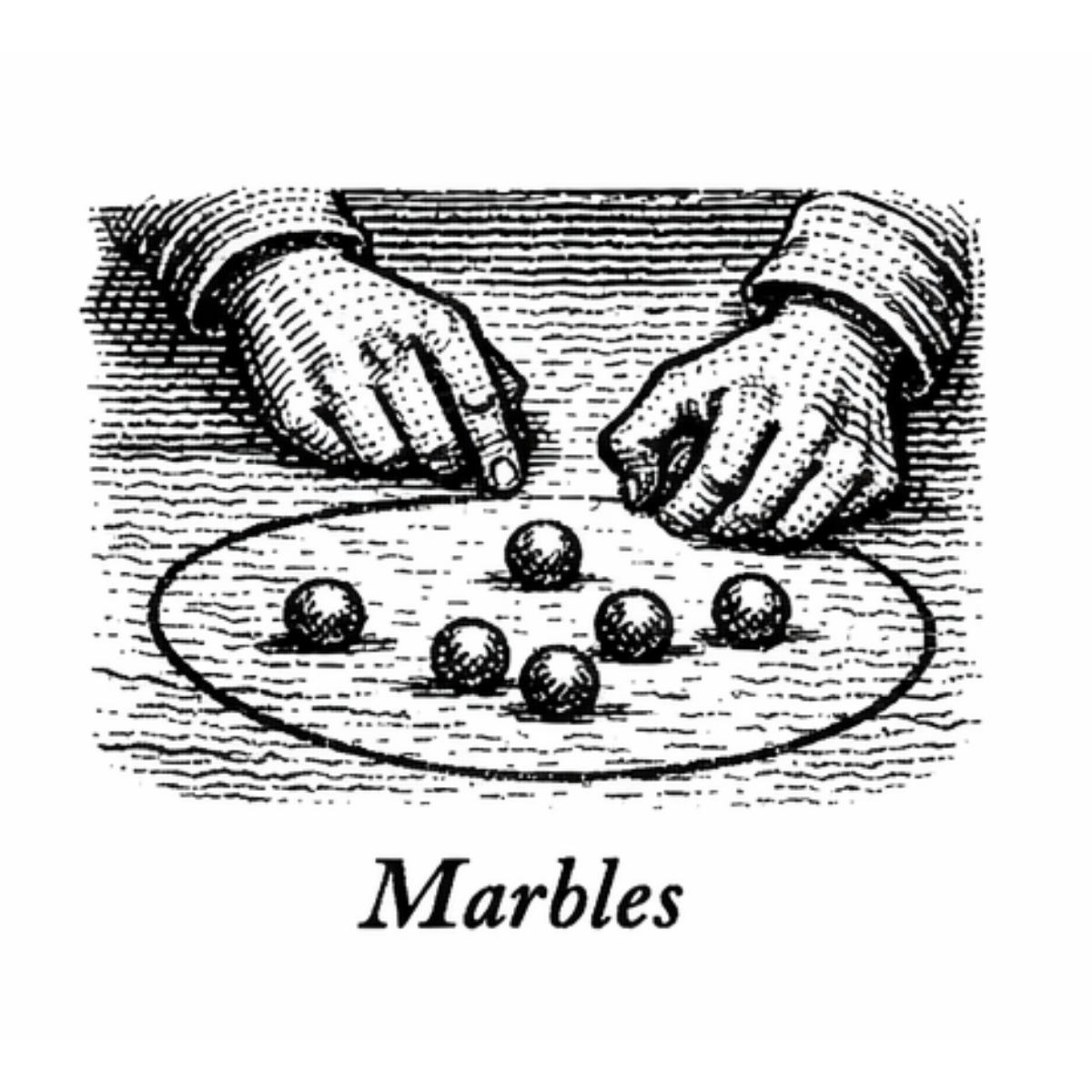
Station 2: Marbles

Marbles have been played for centuries and were especially popular among children in colonial America.
Supplies
• Marbles https://amzn.to/4rob1uE
• Chalk or tape to mark circle https://amzn.to/47Eq9wR
Setup
Draw a small circle on the pavement or use floor tape indoors.
How to Play
Each player places a marble in the circle. Players take turns shooting their marble to knock others out of the ring.
Goal
Collect the marbles you knock out of the circle.
Station 3: Cup-and-Ball

This classic toy has been around for hundreds of years. Players try to catch a small ball attached to a string inside a cup.
Bonus Activity: Download the file at the end of this post. Print instructions on how to make a Cup & Ball toy to take home!
Supplies
• Cup-and-ball toys (store bought or use the DIY instructions under OTHER SUPPLIES, below) https://amzn.to/4lpz2QO
Setup
Provide several toys at a table or open space.
How to Play
Hold the cup and swing the ball upward. Try to catch the ball inside the cup.
Challenge
How many catches can you make in a row? Within a certain amount of time?
Station 4: Ninepins Bowling

Ninepins was an early version of bowling played in colonial America.
Supplies
• 9 plastic bottles or wooden pins https://amzn.to/40WhCBJ
• Small ball
Setup
Arrange the nine pins in a diamond formation.
How to Play
Players roll the ball toward the pins.
Goal
Knock down as many pins as possible in one roll.
Station 5: Graces

“Graces” was a popular colonial game meant to encourage gracefulness and coordination.
Supplies
• Two wooden dowels https://amzn.to/4swfmwI
• Plastic or rope rings https://amzn.to/3Nxd81m
Setup
Two players stand several feet apart.
How to Play
Players use the dowels to toss the ring back and forth to each other.
Goal
Catch the ring smoothly on the receiving dowels.
Station 6: Quoits (Ring Toss)

Quoits is a ring toss game that dates back hundreds of years and was popular in early American communities.
Supplies
• Rope or plastic rings & Pegs https://amzn.to/4b322u6
Setup
Place the peg several feet away.
How to Play
Players toss rings toward the peg.
Goal
Land the ring around the peg.
Station 7: Rolling Ball Maze

Children in earlier centuries often created simple puzzles and games using everyday materials.
Bonus Activity: Download the file at the end of this post. Print instructions on how to make a Ball Maze toy to take home!
Supplies
• Purchased Ball Maze https://amzn.to/47pOAy2, https://amzn.to/47yEQBx, https://amzn.to/4rjw3KR
Or, for an easy DIY version, see link to download printables under OTHER SUPPLIES, below.
Setup
Create a simple maze inside the box.
How to Play
Players tilt the box to guide the marble through the maze.
More Game Ideas
If you want to expand the program, consider adding:
• Sack races
• Jump rope challenges
• Stilts (bucket stilts work well)
• Button spinning toys
• Dominoes
• Checkers
Other Supplies
Depending on how many stations you choose, supplies may also include:
• Clipboards and pencils
• Optional prizes or stickers
Printables for DIY toys, game passports, and instructions for each game can be found HERE.
Program Variations
Drop-In Event
Set up stations around the library and allow families to play anytime during the day.
Timed Family Program
Introduce the history briefly and rotate families through the stations.
Outdoor Celebration
This program works especially well outdoors during summer.
Independence Day Event
Host it near July 4th or as part of America’s 250th anniversary programming in 2026.
Add a scavenger hunt or escape room!
Check out THIS themed scavenger hunt!
Or, THIS escape room!
Or, THIS craft!
Final Thoughts
Programs like Colonial Games Day are a great reminder that history isn’t just something we read about. It’s something we can experience.
Families try the kinds of games children played more than 200 years ago. Through this, they get a glimpse into everyday life in early America. They also enjoy something timeless: playing together.
If you enjoyed this post and want to see others like it, check out these popular posts & subscribe to get the newest posts delivered to your inbox!
*This blog is intentionally ad-free. I want it to be a clean, distraction-free space. Here, public librarians can find practical ideas for youth services, outreach, and programming. There will be no pop-ups or sponsored clutter.
Some posts may include affiliate links for books or supplies I genuinely use and recommend. If you choose to purchase through those links, I may earn a small commission at no additional cost to you. It’s a simple way to support the work while getting materials for your own programs.
If you’ve found value in these ideas, please consider helping keep the blog running. I’m unemployed, so tips are always appreciated. They go directly toward hosting costs and content creation. You can do so here: https://www.paypal.com/ncp/payment/SPBXH4RPDHCCY

Leave a Reply