There are moments in library work that stick with you long after you’ve left a building.
For me, one of those moments wasn’t a packed program or a special event. It was a tiny play area tucked into the children’s department of a small Carnegie library.
It wasn’t fancy.
It wasn’t expensive.
It wasn’t even very big.
But it changed the way families experienced the library.
Libraries Need Spaces for More Than Programs
We spend a lot of time planning storytimes, STEAM activities, craft programs, and special events. Those are important—they bring people through our doors and create memorable experiences.
But what happens on the other days of the week?
Families still need somewhere to go, young children still need opportunities to play and, caregivers still need a place to sit, chat, and connect with others.
Sometimes the most meaningful thing a library can offer isn’t another scheduled program—it’s simply a welcoming place to exist.
[Read: More Than Programs: What Makes a Library Worth Coming Back To]
Why Play Belongs in Libraries
This isn’t just my opinion—it’s supported by research from the library profession itself.
The Association for Library Service to Children (ALSC), a division of the American Library Association, emphasizes that play isn’t a break from learning—it is learning. Through imaginative and constructive play, children build language skills, strengthen early literacy, develop social-emotional skills, and explore the world around them. In fact, Every Child Ready to Read® identifies playing as one of the five key practices that help prepare children to become successful readers, alongside talking, singing, reading, and writing.
When we create inviting spaces where families can play together, we’re doing more than entertaining children—we’re supporting healthy development while helping families see the library as a place where learning happens naturally.
I didn’t know all of this research when I first rearranged a few shelves to make room for a play area. I just knew our families needed a place to linger. They needed somewhere to stay after storytime, somewhere to meet a friend, somewhere to let their children play while they chatted with another caregiver or browsed the shelves.
Looking back, I can see that what we created wasn’t just a corner with toys—it was a space where children learned through play, caregivers found community, and the library became more than a place to check out books. It became a place where families felt they belonged.
That’s the power of making room for play.
[Read: Designing a Fun and Engaging Sensory Play Program for Toddlers & Preschoolers]
A Tiny Corner Made a Big Difference
At my former library, space was limited. Like many historic Carnegie libraries, every square foot mattered.
I looked at one small section of the children’s department and wondered if it could be doing more. So I shifted a few shelves, rearranged some books, and carved out a small interactive play space.
That was it.
No major renovation. No expensive furniture. Just a thoughtful use of the space we already had.
Then we added a few toys.
Over time, we rotated the theme to keep it fresh—giving families something new to discover during each visit.


[Read: Starting from Scratch: Why Phonics Became the Priority]
It Was Used Every Single Day
One of the biggest surprises wasn’t that children loved it. It was that families stayed.
Parents who would normally browse for ten minutes suddenly spent an hour at the library.
Grandparents lingered while grandchildren played. Caregivers struck up conversations with one another. Children who met in that little play space began looking for their friends each week.
Friendships formed. Parents exchanged phone numbers. Families who had never met before became familiar faces.
Without realizing it, the library had become their third space.
The Library Became Part of Their Routine
When families feel comfortable in your building, they don’t just visit when there’s an event on the calendar.
They stop in after preschool.
They visit on rainy afternoons.
They spend an hour playing before heading home.
They begin to see the library as somewhere they belong—not somewhere they only visit for a program.
That sense of ownership changes everything.
Children become more comfortable exploring the collection, parents become more likely to ask questions, and families begin recommending the library to friends.
And before long, those familiar faces become part of your library family, too.
[Read: Designing a Fun and Engaging Sensory Play Program for Toddlers & Preschoolers]
You Don’t Need a Huge Budget
One of the best parts? Creating this kind of space doesn’t have to be expensive.
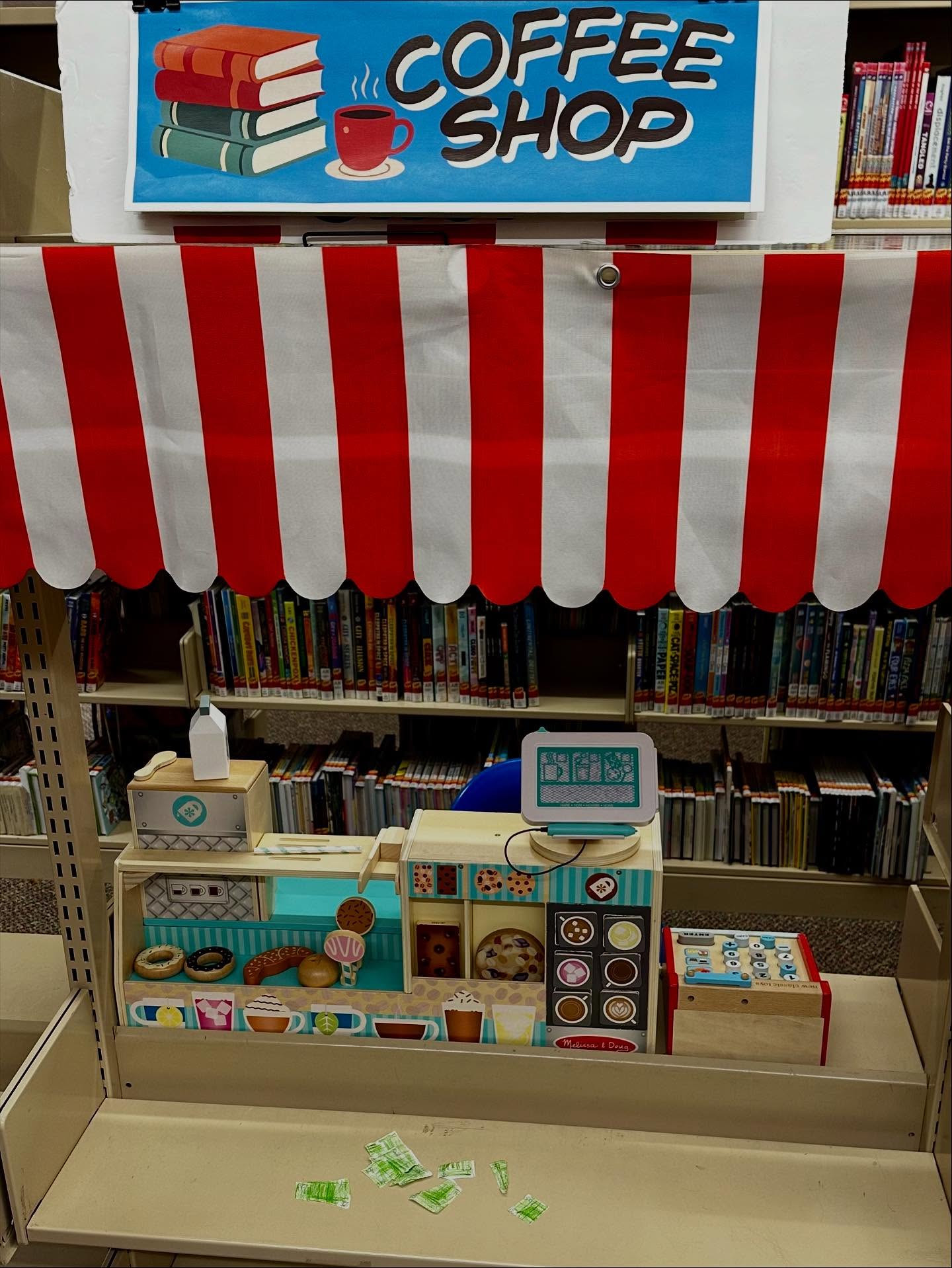
As you can see above, the space was just carved out of some shelves. Many of our toys came through generous community donations.
Friends groups, families, and local organizations are often happy to contribute gently used educational toys that still have plenty of life left in them.
Simple can be wonderful.
Think:
- Pretend play
- Building toys
- Puzzles
- Wooden toys
- Soft play items for toddlers
- Sensory activities
- Rotating themed play sets
The goal isn’t to create an indoor playground.
The goal is to create an invitation.
An invitation to stay a little longer.
On one side, a few empty shelves created an imaginative play area. On the other, on lower empty shelves, bins were filled with toddler toys, wooden cars, and some wooden puzzles. At the end, a building block table. And on the floor, a rug with roads. The whole area probably measured 6′ x 10′.
Rotate the Theme
One thing that kept the space feeling fresh was changing it throughout the year.
Small changes encourage repeat visits because families know there will always be something new to discover, so every few weeks, I changed out the items and shifted things around.
On the top shelf, I made a sign (Deli, Grocery Store, Pizza Parlor, etc.) and used magnets to hang a simple awning.
Play Items
- Pet Vet Playset
- Ice Cream Parlor
- Pizza Parlor
- Housekeeping Set
- Diner
- Deli
- Cash Register
- Grocery Store
- Wooden Cars
- Car Rug
- Wooden Puzzles
- Toddler Toys
- Storage Bins in varying sizes (These are my favorite! So much so, I bought them for my home, too!)
There are so many options, but I will say that I stuck mostly with wooden and silicone for durability and washability.
Any chosen theme can be a great introduction to a book display, too! Above the play area, at a parent height, I took advantage of that space to display corresponding books and other circulating materials.
It Was Never Really About the Toys
Looking back, I don’t remember exactly which toys favorites.
I remember the conversations, toddlers laughing together, and caregivers making friends.
I remember children making me a “sandwich” or an “ice cream cone”.
I remember families feeling like they belonged.
Not entertainment. Community.
Sometimes we think making a library more welcoming requires a large renovation or a significant investment, when in reality, all it may take is a small corner, a little creativity, and the willingness to make room for play.
You might be surprised by what grows there.
I’d love to hear from you!
Does your library have a permanent or rotating play area for children and families? What themes, toys, or activities have been the biggest hit? Share your ideas in the comments—I know we’d all love to see what you’ve created!
If you enjoyed this post and want to see others like it, check out these popular posts & subscribe to get the newest posts delivered to your inbox!
*This blog is intentionally ad-free. I want it to be a clean, distraction-free space. Here, public librarians can find practical ideas for youth services, outreach, and programming. There will be no pop-ups or sponsored clutter.
Some posts may include affiliate links for books or supplies I genuinely use and recommend. If you choose to purchase through those links, I may earn a small commission at no additional cost to you. It’s a simple way to support the work while getting materials for your own programs.
If you’ve found value in these ideas, please consider helping keep the blog running. I’m unemployed, so tips are always appreciated. They go directly toward hosting costs and content creation. You can do so here: https://www.paypal.com/ncp/payment/SPBXH4RPDHCCY

Leave a Reply